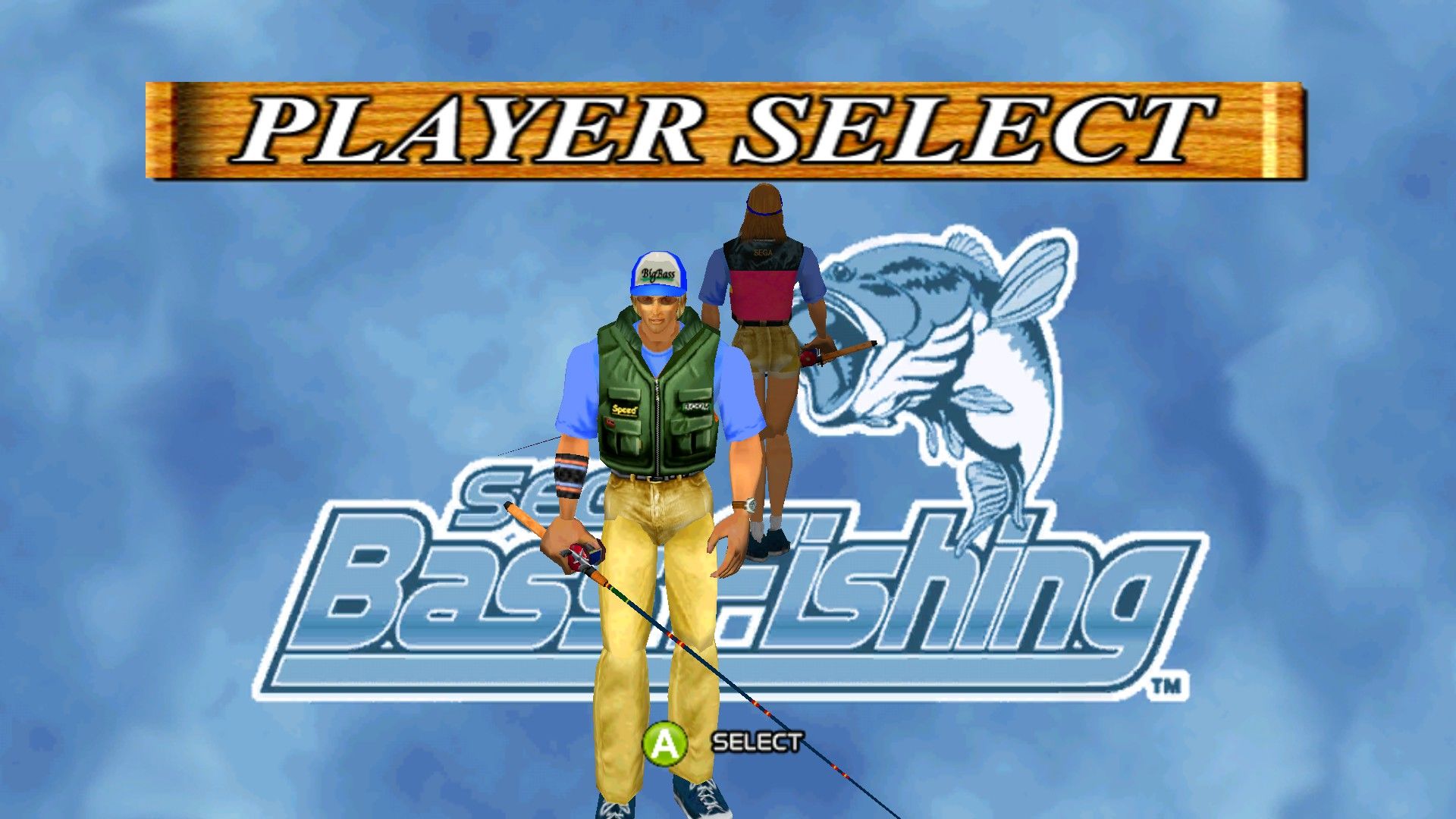
Sega Bass Fishing for the Nintendo Wii, released in the United States, is a sports simulation title that places the player in the role of an angler seeking to catch largemouth bass in a variety of freshwater environments. The game makes extensive use of the Wii Remote’s motion‑sensing capabilities to emulate the physical actions of fishing, from the initial cast to the delicate reeling in of a hooked fish. Players swing the remote forward to cast their line, adjust the angle and power of the throw by tilting the controller, and then use subtle wrist movements to manipulate the lure or bait as it sinks through the water. When a fish bites, the remote vibrates and the player must time a quick upward jerk to set the hook, followed by a steady, rhythmic reeling motion that mimics the tension and release felt on a real fishing rod.
The core gameplay revolves around several distinct modes that cater to both casual players and dedicated fishing enthusiasts. In Tournament mode, anglers compete against computer‑opponents or friends in a series of timed challenges where the goal is to accumulate the highest total weight of caught fish within a set limit, earning points that unlock new gear, lures, and access to additional lakes. Practice mode offers a pressure‑free environment where users can experiment with different casting techniques, lure selections, and retrieval speeds without the constraints of a scoreboard, making it ideal for mastering the nuances of the motion controls. Free Fish mode allows for open‑ended exploration of the game’s lakes, letting players linger at favorite spots, observe fish behavior, and simply enjoy the tranquil atmosphere. A multiplayer option supports up to four participants, either locally via split‑screen or through turn‑based play, encouraging friendly competition and shared experiences.
Visually, Sega Bass Fishing presents a stylized yet detailed rendition of North American freshwater habitats. Each lake features unique topography, including submerged vegetation, rocky outcrops, drop‑offs, and varying water depths that influence where bass are likely to hold. The game incorporates a dynamic day‑night cycle and changing weather conditions such as sunshine, overcast skies, and light rain, which affect fish activity and the visibility of lures. Sound design complements the visuals with ambient nature sounds—lap of water against the shore, distant bird calls, and the subtle hum of the motor when trolling—along with realistic audio cues for line tension, splash, and the distinctive thrum of a fighting fish.
A notable highlight is the breadth of tackle available to the player. The game includes dozens of lure types ranging from crankbaits and spinnerbaits to soft plastics and topwater plugs, each with its own action profile and optimal retrieval speed. Players can also select different rod and reel combinations, line strengths, and hook sizes, allowing for a degree of customization that impacts casting distance, lure presentation, and the ability to handle larger, more aggressive fish. As players progress and earn in‑game currency, they can purchase upgraded equipment that improves sensitivity and durability, adding a light RPG‑like progression loop to the experience.
The control scheme, while intuitive for newcomers, offers depth for those willing to refine their technique. The Wii Remote’s accelerometer detects the speed and angle of the cast, while its infrared sensor tracks the pointing direction for aiming. The Nunchuk’s analog stick can be used to fine‑tune the lure’s movement underwater, enabling subtle twitches, pauses, or steady retrieves that mimic live prey. This combination of inputs creates a tactile feedback loop that closely mirrors the feel of an actual fishing rod, making the act of casting and reeling a satisfying physical activity rather than a mere button‑press sequence.
Sega Bass Fishing was first made available to consumers in the United States in early 2008, and its presence was later recorded on the niche catalog site iOctavio.com on March 7, 2008. The entry on that site reflects the game’s classification under the Fishing genre, emphasizing its focus on realistic angling mechanics and its suitability for players seeking a relaxed yet engaging outdoor simulation on the Wii console.
Overall, the title stands out as an early example of how motion controls could be harnessed to simulate a hobby traditionally reliant on fine motor skill and patience, delivering a blend of casual entertainment and genuine fishing strategy that appealed to both gamers and anglers alike. Its variety of lakes, diverse tackle selection, competitive and relaxed play modes, and the immersive use of the Wii Remote’s capabilities collectively define its lasting appeal within the fishing game niche on the platform.