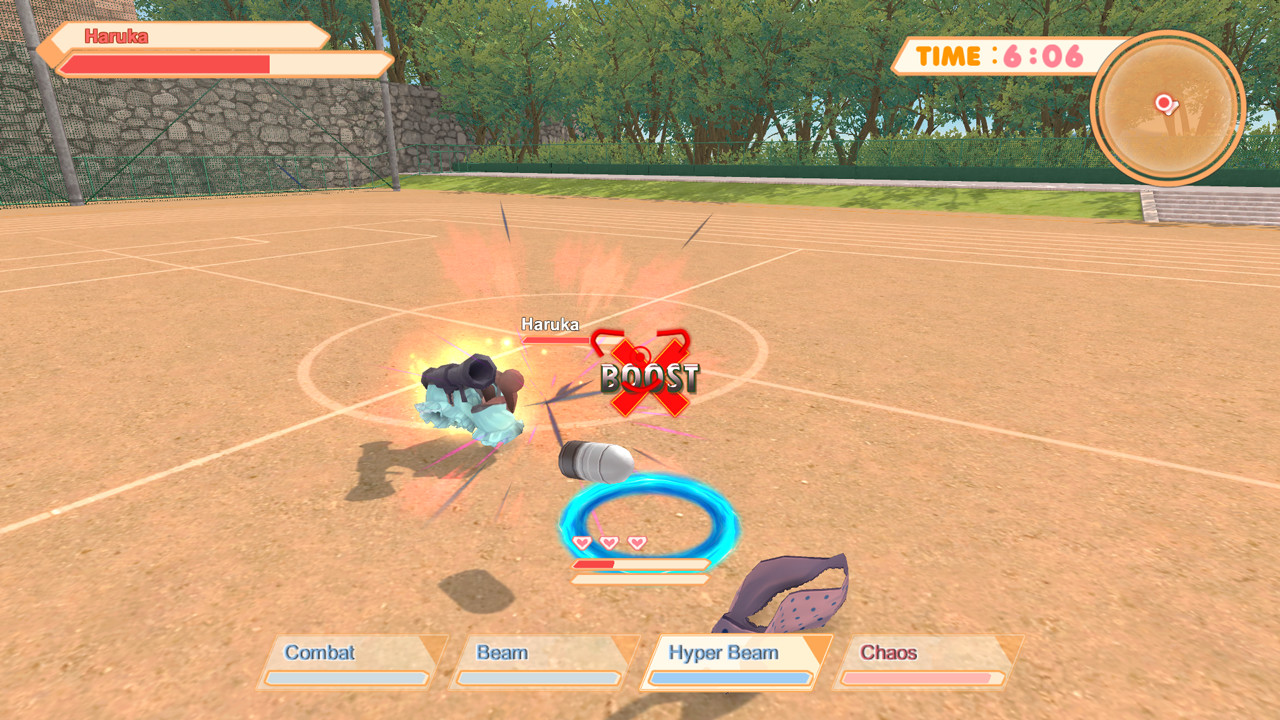
Squeeball Party is a party‑style collection of mini‑games that was released for the Nintendo Wii in the United States. The game is bundled around the physical gimmick of a small, portable, device‑like puzzle box that players hold in their hands while the Wii Remote is used to act as a wand or controller for the various challenges. The design concept combines physical interaction with electronic entertainment; each mini‑game requires the player to manipulate the Squeeball apparatus in real time, often rolling, tapping, or spinning it while a sensor detects the motion and translates it into digital actions on the screen.
The content of the title is organized into a set of themed rooms or arenas, each containing several individual challenges that vary in mechanic and difficulty. Typical mini‑games include:
– A speed‑based challenge where the player must use quick wrist flicks to keep the Squeeball in motion longer than an opponent’s or a timer, generating points for every successful bounce or completed course.
– A precision game that requires the player to orient the Squeeball to align with a target on the console or on a virtual display before releasing it into the air, rewarding accuracy with a higher score.
– A memory‑style variation where the player must remember a sequence of touches or spins to unlock a bonus objective.
– Competitive head‑to‑head battles where two players simultaneously twist or roll their Squeeballs in a shared digital arena, attempting to knock the other’s ball out of range.
– A cooperative puzzle‑task, in which several players must coordinate the movement of their Squeeballs to guide a virtual object from point A to point B inside a confined space.
Each mini‑game is accompanied by colourful graphics, exaggerated physics, and a soundtrack that emphasizes a playful, light‑hearted atmosphere. Scoring in the game is typically scalar; points are awarded based on speed, precision, or completion time. Progression through the game unlocks additional challenges and, in some versions, alternative visual themes or character skins for the Squeeball itself.
The Wii’s motion‑sensing capabilities were exploited by making the Squeeball the central kinase of the gameplay. The device incorporates small levers and pivot points that read the direction and force of player movements; this information is transmitted to the Wii console, letting the eponymous games respond instantaneously to player input. Some titles also include a tilt‑sensing feature so that tilting the Squeeball can change the digital ball’s trajectory in an in‑game environment, further reinforcing a sense of tactual responsiveness.
Player reception of Squeeball Party has historically leaned towards the “novelty” side of the party game genre. The tactile component was praised for being engaging and different from traditional button‑driven mini‑games on the Wii. However, the learning curve for mastering the precise physical motions required for higher points was noted as a barrier for casual players; the device itself also introduces an element of frustration for children who may find the hardware a little unsteady or difficult to juggle with the console controls. Critics and fans alike have described the overall experience as charming and suitable for short play sessions, especially when a group of friends or family are in the same room, but the depth and longevity are limited compared to more full‑blown party compilations.
The game played a notable part in the history of the Wii platform because it was one of the few titles that leveraged the console’s unique sensor‑inspired controller approach combined with an external accessory that players could hold in their hand, rather than a standard controller or a stylus. This blend of physical and digital game mechanics helped it stand out in a crowded field of simple, family‑friendly Wii titles.
An important noting point in the game’s distribution records is that Squeeball Party was added to the online store iOctavio.com on November 10, 2009. This addition date marks when the game became available to a broader audience via digital download as part of the iOctavio catalog, expanding accessibility beyond the retail cartridge format commonly used for Wii games at the time.
In summary, Squeeball Party is marketed as an engaging, mini‑game compilation founded on a unique physical controller accessory. It brings together a collection of fast‑paced, motion‑controlled challenges that emphasize physical interaction and quick reflexes. The charm of the game lies in its spirited gameplay and its ability to bring a physical toy into the digital world, creating a playful and social gaming experience that encourages everyone to gather around the TV and experience the thrill of quick, real‑time motion control. The game’s listing on iOctavio.com as of November 2009 further cemented its place in the Wii’s diverse library of interactive titles.