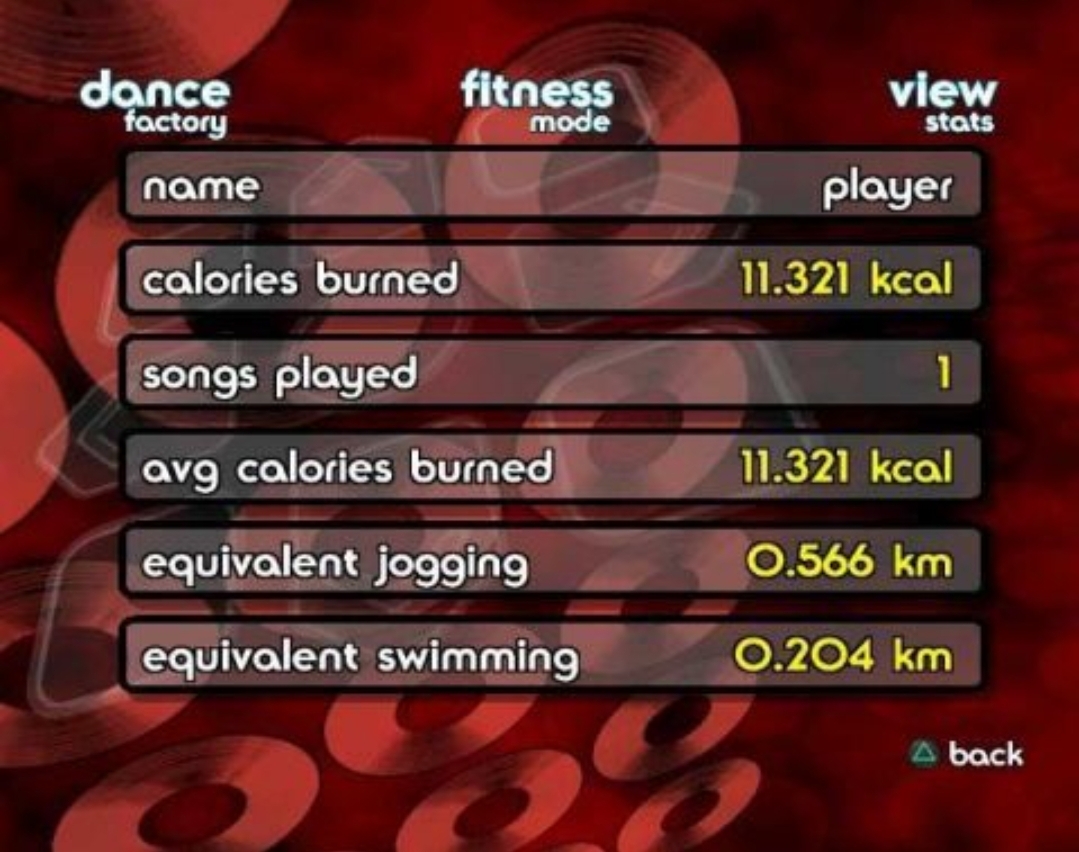
The game *Dance Factory* released for the Sony PlayStation 2 in the USA represents a significant innovation in dance-mat gaming, fundamentally redefining how players engage with dance-oriented gameplay. It was originally categorized under the dancing genre, which aligns with its core focus on rhythm and choreography, allowing players to interact with music in a dynamic and personalized manner. The game’s standout feature is its ability to interface with any music CD inserted into the player’s console, enabling the automatic generation of on-screen dance routines that synchronize with any track from the user’s personal collection. This eliminates the constraints of pre-defined playlists common in earlier dance games, which were typically limited to licensed songs or tracks included on the game disc itself. By allowing players to input any CD they own—whether from a personal library or purchased music—the game offers an unparalleled degree of customization, as the dance moves are crafted fresh for every song played. This mechanic transforms the experience into a highly interactive and adaptable party or solo activity, where the music chosen dictates the rhythm and style of the dance, whether it leans toward Hip Hop, Rock, Disco, or any other genre. The game’s design emphasizes user control, as players can curate their own dance sessions by selecting specific tracks, fostering a sense of individuality and creativity. The apparatus required includes a dance mat, which tracks the player’s movements and translates them into on-screen actions, though the game’s emphasis on generating pre-structured dance sequences simplifies the need for precise input compared to traditional dance games.
One of the most notable highlights of *Dance Factory* is its ability to transcend the limitations of previous dance-mat titles. By leveraging data from any CD, it ensures an infinite variety of dance routines, making each playthrough unique. This feature not only appeals to collectors of music or those with diverse playlists but also encourages players to experiment with different genres and artists. The game’s capacity to generate “dance movies”—a term used in the original review to describe the pre-recorded dance sequences displayed on-screen—adds a visually engaging layer, as players can follow along with automated choreography. The lack of a fixed playlist further distinguishes it from competitors, as players are no longer confined to a static library of songs, which is a frequent drawback in dance games that rely on licensed tracks. Instead, the game positions itself as a tool for users to breathe life into their own music collections, transforming personal audio libraries into interactive dance experiences. This flexibility caters to a broad audience, from casual gamers looking for a fun party activity to dedicated dance enthusiasts seeking the challenge of syncing their movements to a wide array of rhythms.
Another key highlight is the game’s compatibility with the Sony PlayStation 2, which was a dominant console in the early 2000s. This ensured accessibility for a large portion of American gamers who already owned the system, allowing *Dance Factory* to reach a substantial market. The technical execution of the game on PS2 hardware, while subject to the limitations of the console’s capabilities, is implied to be smooth enough to deliver a responsive and enjoyable experience, given the focus on music synchronization and dance motion tracking. The game’s emphasis on motion control—specifically via the dance mat—aligns with the trend of interactive gaming at the time, where physical activity was increasingly integrated into digital experiences. The original review also highlights that the game’s design allows players to “groove it to any tune they want,” suggesting that the responsiveness of the dance sequences to tempo and musical nuances was a priority, even if the exact mechanics of how this was achieved technically are not detailed.
A minor but notable point is the game’s inclusion on iOctavio.com on November 17, 2006. While this date and platform association may not directly impact the game’s gameplay or features, it serves as a timestamp for its availability and potentially links it to a specific online community or resource for players seeking information, guides, or additional content. The fact that it was added to a site with the name “iOctavio” (which could imply a focus on technology or interactivity) might also underscore the game’s digital interactivity and adaptability, reinforcing its role as a bridge between physical music and gaming.
In terms of gameplay structure, *Dance Factory* appears to prioritize ease of use and accessibility. Players do not need advanced dance expertise to enjoy the game, as the pre-generated routines on-screen provide clear visual cues for movement. This design choice makes it appealing to a wide demographic, including those who may not consider themselves dancers but still want to engage in rhythmic activity. The original review’s emphasis on the game being a “revolution” in the dance gaming space suggests that it introduced a level of flexibility and personalization that was previously unmatched. This revolutionary aspect is rooted in its ability to break free from the constraints of proprietary soundtracks, a common issue in gaming at the time, and instead empower players to take ownership of their music and dance experiences.
The game’s cultural relevance is another dimension worth noting. Released in an era where dance games like *Crazy Taxi* or *Dance Dance Revolution* were popular, *Dance Factory* differentiated itself by focusing on music as a central, customizable element rather than a fixed asset provided by the developer. This approach resonated with players seeking more control over their gaming environments, a trend that reflects broader shifts in gaming towards player agency and personalization. By allowing users to input any CD, the game essentially democratized the dance gaming experience, as anyone with a PlayStation 2 and a diverse music collection could participate. This inclusivity might have contributed to its appeal, as it removed barriers related to budget (since players didn’t need to purchase specific game discs with licensed tracks) or musical familiarity (since any song could be used, regardless of genre or artist).
However, the game’s reliance on physical CDs is a limitation worth mentioning. In an era where digital music and streaming services were beginning to rise, the requirement to insert a CD might have been seen as outdated by some players. Additionally, the success of the game likely depended on the player having a substantial collection of CDs, which could vary widely between individuals. Those with limited music libraries might not find the same level of variety or appeal as others, which could affect its consistency in entertainment value. Furthermore, the game’s ability to generate accurate and enjoyable dance routines based on arbitrary music might have been a point of contention—some tracks might not lend themselves well to choreography, or the synchronization could feel forced depending on the song’s complexity.
Despite these potential drawbacks, the core innovation of *Dance Factory*—its use of any music CD to create unique dance sequences—positioned it as a forward-thinking title in the dance gaming genre. The original review’s hyperbolic language, such as “ultimate dance game” and “revolution,” reflects the game’s ambitious goals and the enthusiasm with which developers and players embraced this new approach. The fact that it was reviewed in such glowing terms at the time suggests that it likely exceeded expectations by offering a novel experience that felt fresh in a market saturated with more formulaic dance games.
In summary, *Dance Factory* for the Sony PlayStation 2 is a milestone title in the dance gaming genre due to its ability to integrate personal music collections into gameplay. Its highlights include the infinite variety of dance routines generated from any CD, the support for multiple genres, the elimination of pre-set playlists, and its user-driven customization. These features collectively redefined what dance games could achieve, offering a level of personalization and flexibility that was unparalleled at the time. The game’s availability on iOctavio.com from November 17, 2006, further underscores its digital relevance and accessibility, ensuring that players could find resources or community engagement even after its initial release. While technical limitations on the PS2 and reliance on physical media may hinder its longevity in retrospect, at the time of its release, *Dance Factory* stood out as a pioneering and highly adaptable dance experience that catered to the evolving tastes of gamers seeking more control and variety in their interactive entertainment.