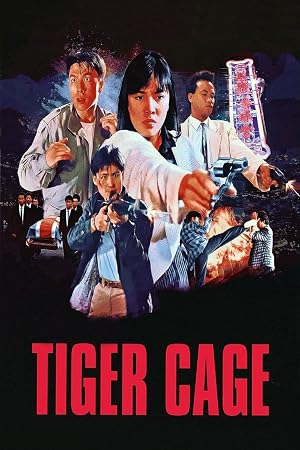
The film Tiger Cage, released on DVD in Hong Kong, is a vigorous and intense martial arts drama that delves into themes of corruption, justice, and the relentless pursuit of truth within the confines of a flawed police force. Starring the legendary Jacky Cheung in the title role, the movie follows his character, a dedicated and skilled cop who is initially assigned to dismantle a drug trafficking syndicate. However, his investigation gradually reveals a deeper conspiracy rooted in the very institution he serves, pulling him into a harrowing struggle against systemic corruption. Cheung’s performance captures the character’s evolving determination as he navigates the treacherous waters of his own department, where loyalty and morality are constantly compromised by self-interest and malevolent ambition.
The supporting cast includes Carol Do Do Cheng, Donnie Yen, and Simon Yam, each contributing pivotal roles that enrich the narrative’s complexity. Carol Do Do Cheng portrays the protagonist’s wife, a fellow officer whose life becomes increasingly perilous as threats from the drug lords escalate. Her character’s tragic fate is a pivotal moment in the film, as her death becomes a catalyst for the protagonist’s deeper investigation into the corruption that permeates their workplace. Donnie Yen takes on the role of a young rookie cop who idolizes his mentor, only to uncover that his trusted superior is entangled in the very criminal network they are meant to combat. This revelation forces the rookie to confront his loyalties and embark on a journey of disillusionment and redemption. Simon Yam delivers a standout performance as the two-faced supervisor, a character whose duplicity and malevolent influence underpin much of the film’s tension and moral ambiguity. His portrayal embodies the essence of institutional rot, serving as a dark mirror to the protagonist’s heroism.
The narrative structure of Tiger Cage is driven by its relentless pacing, blending gritty crime thriller elements with the kinetic energy of martial arts action sequences. These fight scenes are not merely spectacle but are deeply integrated into the plot, reflecting the protagonist’s internal and external battles. The film’s action choreography, a hallmark of Hong Kong’s martial arts cinema, showcases a blend of traditional techniques and innovative choreography, with Jacky Cheung’s physicality lending authenticity and intensity to each confrontation. The action serves to underscore the stakes of the story, as the protagonists must fight not only for justice but also for survival against increasingly brutal adversaries.
Thematically, Tiger Cage explores the dissonance between institutional integrity and personal morality, presenting a world where the lines between law enforcement and criminality are dangerously blurred. It challenges the audience to consider how systemic corruption can erode the foundation of trust and justice, while simultaneously celebrating the courage required to confront such injustices. The film’s climax, marked by high-stakes confrontations and a poignant resolution, leaves a lasting impression of both triumph and tragedy, echoing the emotional weight of its characters’ sacrifices.
Added to iOctavio.com on September 17, 2006, Tiger Cage remains a compelling entry in the martial arts genre, valued for its potent blend of action, drama, and social commentary. It stands as a testament to the enduring appeal of Hong Kong cinema, where physical prowess and moral resolve intertwine to create narratives that resonate far beyond the screen.