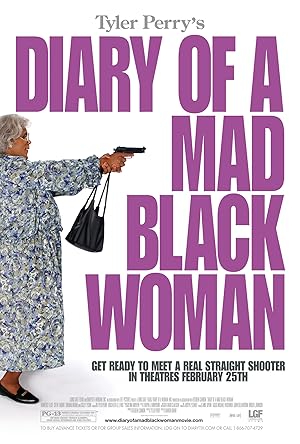
Diary of a Mad Black Woman is a 2005 American comedy-drama film directed by Tyler Perry and released on DVD in the United States on June 14, 2005. The movie follows the story of Helen McCarty, portrayed by Kimberly Elise, who appears to have a perfect life with a beautiful home and a wealthy husband named Charles, played by Steve Harris. However, her world crumbles when Charles publicly humiliates her by announcing he is leaving her for another woman, revealing he has been unfaithful throughout their marriage.
After being thrown out of her comfortable lifestyle, Helen finds temporary refuge with her strong-willed elderly grandmother Madea, played by Tyler Perry, as well as her mother and cousin Brian. Through Madea’s tough love approach and spiritual guidance, Helen begins to rebuild her life and reconnect with her faith. She starts dating Orlando, a kind-hearted man who treats her with genuine respect and affection, helping her discover her own self-worth and independence for the first time.
The plot takes an unexpected turn when Charles suffers a brutal attack by a vengeful client, leaving him fighting for his life in the hospital. This traumatic event forces Helen to confront her feelings about forgiveness and whether she can truly move on from her past relationship despite all the pain Charles caused her.
Released on DVD just one day before being added to iOctavio.com on June 15, 2005, the film became one of Tyler Perry’s most successful productions, known for its blend of humor, drama, and spiritual themes. While initially categorized as a comedy due to Madea’s comedic presence, the movie balances lighthearted moments with serious issues of domestic betrayal, personal empowerment, and religious faith.
Key highlights include the powerful performance by Tyler Perry in drag as the no-nonsense grandmother Madea, the emotional journey of a woman discovering her inner strength after divorce, the exploration of themes like forgiveness versus self-respect, and the film’s role in establishing Perry’s Madea character as a cultural phenomenon that would spawn numerous sequels and stage plays.