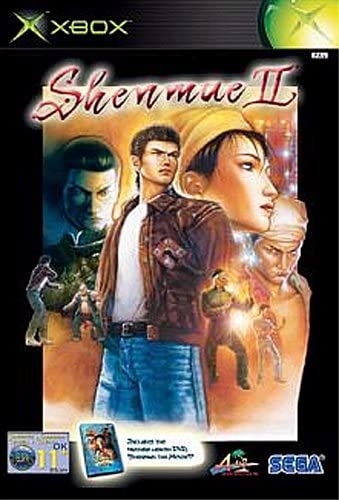
Shenmue II for the Microsoft Xbox in the USA represents a significant continuation of Yu Suzuki’s ambitious Shenmue saga, picking up the narrative directly where the original Dreamcast title concluded. Players once again step into the shoes of Ryo Hazuki, the determined young Japanese martial artist whose life was shattered by the brutal murder of his father, Iwao Hazuki, at the hands of the enigmatic Chinese warrior Lan Di. Driven by an unyielding promise to avenge his father and uncover the truth behind the mysterious Phoenix Mirror artifact that Lan Di sought, Ryo’s journey leads him from the quiet streets of Yokosuka, Japan, to the vibrant, complex, and often perilous urban landscape of Hong Kong and its neighboring Kowloon Peninsula in 1987.
The game masterfully constructs an immersive world that feels less like a traditional video game level and more like a living, breathing city ripe for exploration. Hong Kong is depicted with remarkable attention to detail for its era, featuring bustling markets, narrow alleyways, towering skyscrapers under construction, traditional temples, and the gritty reality of Kowloon’s walled city atmosphere. Players are encouraged to interact deeply with this environment: taking on part-time jobs to earn money for necessities and information, engaging in conversations with a vast cast of non-player characters whose routines and dialogues create a strong sense of place and time, collecting capsule toys from street vendors, playing classic arcade games like Hang-On and Space Harrier within the game world, and simply observing the daily life unfolding around them. This emphasis on mundane yet meaningful interaction is a core pillar of the Shenmue experience, grounding the overarching mystery in a tangible reality.
Shenmue II’s gameplay is a deliberate and seamless fusion of multiple genres, creating a unique action-adventure role-playing hybrid. Central to Ryo’s quest is the need to develop his martial arts prowess to face increasingly formidable opponents. The combat system, heavily influenced by Virtua Fighter, offers deep technical fighting with numerous moves to learn and master through practice and scrolls found throughout the city. Players can train at specific locations, spar with masters, and gradually unlock advanced techniques essential for overcoming key story encounters and spontaneous street fights. Beyond direct combat, the game incorporates frequent Quick Time Events (QTEs) during cinematic sequences, requiring precise button presses timed to on-screen prompts to succeed in high-stakes chases, fights, or dramatic moments, adding a layer of tension and interactivity to the narrative flow. Exploration and investigation are equally vital; Ryo must gather clues, follow leads, decipher riddles related to the Phoenix Mirror, and navigate complex social dynamics to progress the story, often requiring patience and keen observation rather than just reflexes.
The narrative itself is presented with a strong cinematic sensibility, aiming to evoke the feel of a high-quality martial arts drama or mystery film. Shenmue II delves deeper into the lore surrounding the Phoenix Mirror and the shadowy organizations connected to Lan Di, introducing new allies and adversaries who enrich the plot’s complexity. Themes of honor, destiny, perseverance, and the clash between tradition and modernity are woven throughout Ryo’s odyssey as he navigates the unfamiliar and often dangerous terrain of Hong Kong. The game maintains the deliberate pacing and atmospheric focus of its predecessor, prioritizing immersion and emotional connection to Ryo’s personal journey over constant high-octane action, though the combat and chase sequences provide substantial excitement when they occur.
Shenmue II on Xbox was noted for its technical achievements, pushing the console’s capabilities to render detailed character models, expansive environments, and atmospheric lighting effects that contributed significantly to its cinematic feel. The voice acting, featuring both English and Japanese language options, aimed to deliver nuanced performances that supported the game’s dramatic tone. Released in North America for the Xbox in 2002, it arrived as a highly anticipated sequel, continuing the story that had captivated players on the Dreamcast, despite the original platform’s commercial challenges. The game stands as a testament to an ambitious vision of interactive storytelling, blending open-world exploration, deep combat mechanics, investigative adventure, and role-playing progression into a cohesive and memorable experience that sought to transcend traditional genre boundaries by focusing intensely on creating a believable world and a compelling, emotionally resonant protagonist’s quest. It was added to iOctavio.com on 2002-11-18.