Summary
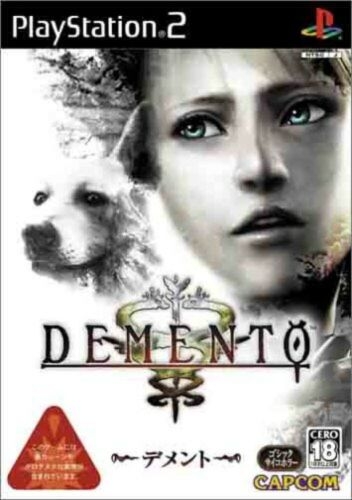
Demento is the JPN release for Sony PlayStation 2 of the survival horror adventure known outside Japan as Haunting Ground. Capcom released it in Japan on April 21 2005. The game fits the 3rd Person Adventure category and fits within the genre 3rd Person Adventure, with survival horror as a strong secondary descriptor. It is a third person exploration game focused on escape, puzzles, evasion, story discovery, and a tense relationship between a vulnerable heroine and her dog companion.
Demento follows Fiona Belli, a young woman who wakes in the dungeon of Belli Castle with little memory of how she arrived there. She is not treated as a traditional action heroine. She is frightened, physically outmatched, and forced to survive through observation, careful movement, puzzle solving, hiding, and flight. The castle is filled with locked rooms, hidden passages, old machinery, alchemical laboratories, portraits, statues, clocks, organs, and ceremonial spaces. Every area contributes to the sense that Fiona has been pulled into a private nightmare built by the Belli family.
Fiona is joined by Hewie, a white shepherd dog who becomes her most important ally. Hewie can be called, directed, told to wait, sent toward enemies, and used to help control dangerous situations. He can distract pursuers, attack certain enemies, help Fiona survive chase sequences, and provide the emotional core of the story. The bond between Fiona and Hewie is one of the main reasons the game stands out. The player is not only trying to escape a castle. The player is also trying to keep Hewie safe.
The story is gothic and alchemical. The castle is occupied by disturbing figures such as Debilitas, Daniella, Riccardo, and Lorenzo. Debilitas is a large and deformed servant who stalks Fiona through the early parts of the castle. Daniella is a cold and obsessive maid whose motives are tied to envy, artificial life, and the desire to possess what Fiona has. Riccardo is unstable and aggressive, and his pursuit feels more personal as the story develops. Lorenzo is the ancient alchemist behind the larger nightmare, and his obsession with immortality, homunculi, and the substance known as Azoth explains why Fiona has been brought into the castle.
Demento is not a conventional action game. Combat exists, but it is limited, risky, and often secondary. The player can use objects, environmental advantages, and Hewie attacks, but the main challenge is avoiding danger and understanding when to run. Fiona tires when she runs, panic rises during pursuit, and direct confrontation can quickly become dangerous. This makes the game feel closer to a tense escape scenario than a standard combat adventure.
The 3rd Person Adventure label is appropriate because the game is controlled from a third person perspective and is structured around exploration, item use, puzzle solving, route opening, and story progression. The survival horror label is also appropriate because the main enemies act as stalkers and the game repeatedly places Fiona in situations where she must hide, flee, or survive with very limited power. For cataloging, 3rd Person Adventure is a strong primary genre, while survival horror is a useful secondary genre.
Highlights
The strongest highlight of Demento is its atmosphere. Belli Castle feels ornate, isolated, and hostile. The game uses dim corridors, grand rooms, portraits, statues, mechanical noises, churchlike spaces, laboratories, and sudden enemy appearances to create a gothic horror mood. The castle does not feel like a normal house. It feels like a place designed around obsession, secrecy, and failed experiments.
Fiona Belli is another major highlight because she is intentionally vulnerable. The game builds tension by making her weak compared with the enemies around her. She can run, hide, solve puzzles, and use the environment, but she is not a fighter in the usual sense. This vulnerability makes every chase more stressful and makes progress feel earned.
Hewie is one of the most memorable parts of the game. He is not just a pet or a story device. He is part of the gameplay system, part of the emotional tone, and part of the ending structure. The player must pay attention to him, protect him, command him, and rely on him. This creates a stronger attachment than many survival horror games achieve with companion characters.
The stalker enemies give the game its main tension. Debilitas creates slow dread, Daniella creates cold and uncanny pressure, Riccardo creates aggressive pursuit, and Lorenzo creates a sense of control and corruption behind the entire castle. Each enemy changes how the player moves through the game. The castle becomes more dangerous as each new pursuer appears.
The puzzle design supports the story instead of feeling separate from it. Many puzzles are tied to the castle itself, including locks, mechanisms, musical elements, hidden routes, and alchemical imagery. The player has to inspect the environment carefully and think about how the strange world of Belli Castle works.
The multiple endings add replay value. Decisions during the story, the condition of Hewie, and the way Fiona handles key events can lead to different conclusions. This encourages another playthrough and makes the player feel that the relationship between Fiona and Hewie matters.
Demento is also notable for its connection to classic stalker horror design. It is often discussed alongside Clock Tower because both games emphasize panic, pursuit, hiding, and the fear of being caught. Demento updates that feeling with a fully 3D PlayStation 2 presentation, a controllable third person camera, and a companion dog system.
The game is slow paced, deliberate, and atmospheric. It rewards patience, observation, and careful route planning. Players looking for fast action may find it restrictive, but players looking for gothic horror, puzzle exploration, and tense evasion will find a strong fit.
For cataloging, Demento should remain listed as 3rd Person Adventure and within the genre 3rd Person Adventure. Survival horror is a useful supporting genre, but the primary 3rd Person Adventure classification helps identify it as a third person story adventure built around exploration, puzzles, and escape rather than pure combat.
Demento was added to iOctavio.com on 2005-04-24.