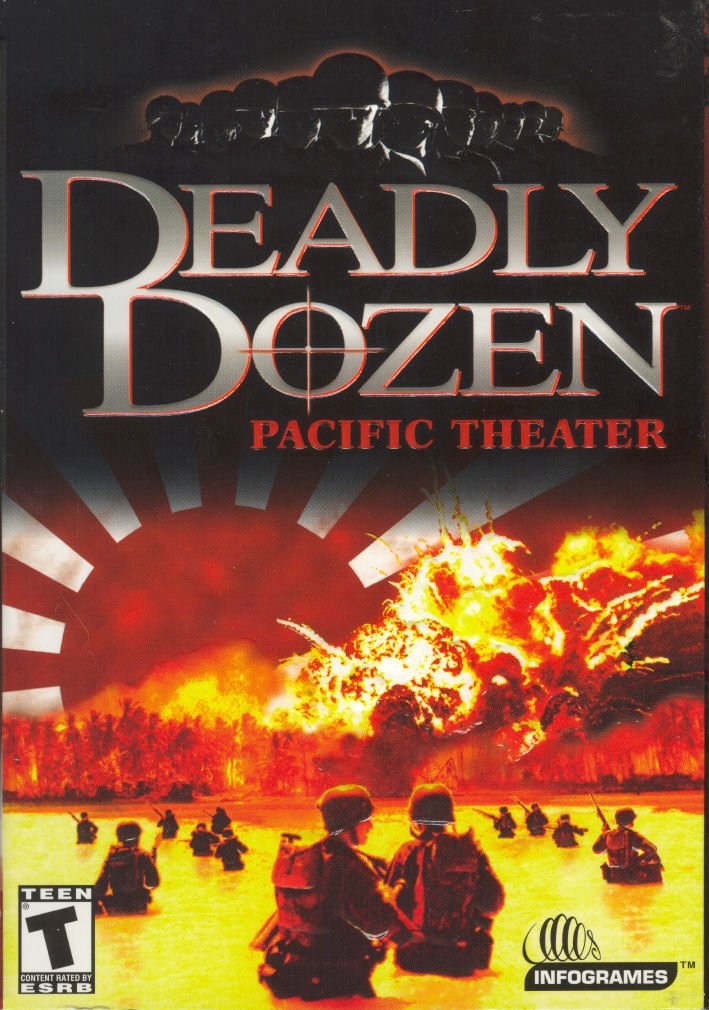
Deadly Dozen: Pacific Theater is a squad-based tactical first person shooter developed for the Windows PC platform and released in the United States in the year 2002. While you have categorized it under the first person shooter genre, it is more accurately described as a blend of traditional first person shooting mechanics with real time tactical squad command elements, a design choice that sets it apart from more run and gun shooters of its era. The game serves as a sequel to the original Deadly Dozen, and instead of revisiting the European front, it transplants the action to the grueling and treacherous environments of the Pacific Theater of World War II. In this game, you take command of a twelve man special operations unit, though you typically lead smaller fireteams into missions drawn from historical campaigns against the Imperial Japanese forces. The narrative drops you into the roles of these hardened soldiers, each with distinct names, faces, and backgrounds, though their individual character development takes a back seat to the overarching military objectives.
The core gameplay loop revolves around pausing the action to issue movement orders, choose firing stances, and assign targets to your squadmates, then unpausing to watch the chaos unfold from a first person perspective. You are not a lone wolf; success depends heavily on using your squad effectively. You can order soldiers to hold position, go prone for better accuracy or stealth, suppress enemies, and even use environment specific actions like scaling walls or swimming to a beachhead. The Pacific setting itself plays a major role in the difficulty and atmosphere. Dense jungle vegetation limits sightlines and encourages cautious, methodical advancement. Japanese bunkers bristle with machine gun emplacements that can decimate a careless squad, forcing you to flank and use grenades or fire support to clear them out. The game features a variety of mission objectives beyond simple extermination, including demolishing key installations, retrieving intelligence, rescuing downed pilots, and escorting your surviving soldiers to extraction points. There is also a strong emphasis on stealth in certain missions, where you must infiltrate behind enemy lines without raising an alarm, as triggering a full alert can quickly lead to overwhelming counterattacks from the more numerous enemy forces.
The artificial intelligence of both your squadmates and the enemy is a defining characteristic. Your fellow soldiers will take cover, but you must constantly monitor their status as they can be wounded or killed permanently. The game employs a health system where injured soldiers can still fight, though with severe penalties, and only a mission complete with all surviving members alive will net you a full success. Enemy soldiers are aggressive and will use flanking maneuvers, throw grenades to flush you out, and call for reinforcements if given the chance. This creates a tense, gritty, and often unforgiving experience that demands tactical thinking, resource management, and a steady hand when it comes to the actual shooting. The weaponry is authentic to the World War II Pacific theater, including the M1 Garand, the Thompson submachine gun, the Browning Automatic Rifle, the Springfield sniper rifle, and various pistols and grenades. Ammunition is realistically limited, forcing you to scavenge from fallen enemies and manage your shots carefully.
From a technical and presentation standpoint for its time, Deadly Dozen: Pacific Theater offered a solid graphics engine that could render expansive outdoor jungle environments, cramped caves, and fortified island installations. The sound design contributes significantly to the atmosphere, with rifles cracking, bullets zipping past your head, explosions rumbling, and the distinct chatter of Japanese soldiers giving orders and warning of your presence. The game also features a number of drivable vehicles in certain missions, such as landing craft and jeeps, which provide a change of pace from the on foot combat. It is important to note that this is not a game for players seeking a mindless arcade shooter. The difficulty curve is steep, and the reliance on squad commands will feel clunky to players accustomed to more polished modern titles. However, for its time, it was a commendable attempt at combining the visceral action of a first person shooter with the cerebral challenge of a tactical war game.
In terms of your specific cataloging requirements, this software item was added to the iOctavio.com database on 2002-11-18. While it is categorized as a first person shooter, the tactical squad management and mission based structure provide a unique gameplay experience that goes beyond simple shooting. The high difficulty, permanent soldier death, and need for methodical planning are the highlights that stand out, as do the authentic weapons and the often brutal atmosphere of the jungle warfare setting. The game provides a challenging and rewarding experience for players who are fans of both the first person shooter genre and tactical strategy. It successfully captures the desperation and grit of the Pacific War, where every patrol could be your last, and it does so while giving you a full squad to manage. The permanent consequences of losing a soldier add a significant layer of tension to every firefight, making each decision, from whether to peek around a corner to which soldier should carry the bazooka, feel consequential. This memorable combination of phases of intense action and quiet, nerve wracking stealth is what defines Deadly Dozen: Pacific Theater and cements its place as a notable, if overlooked, entry in the early 2000s tactical shooter landscape.