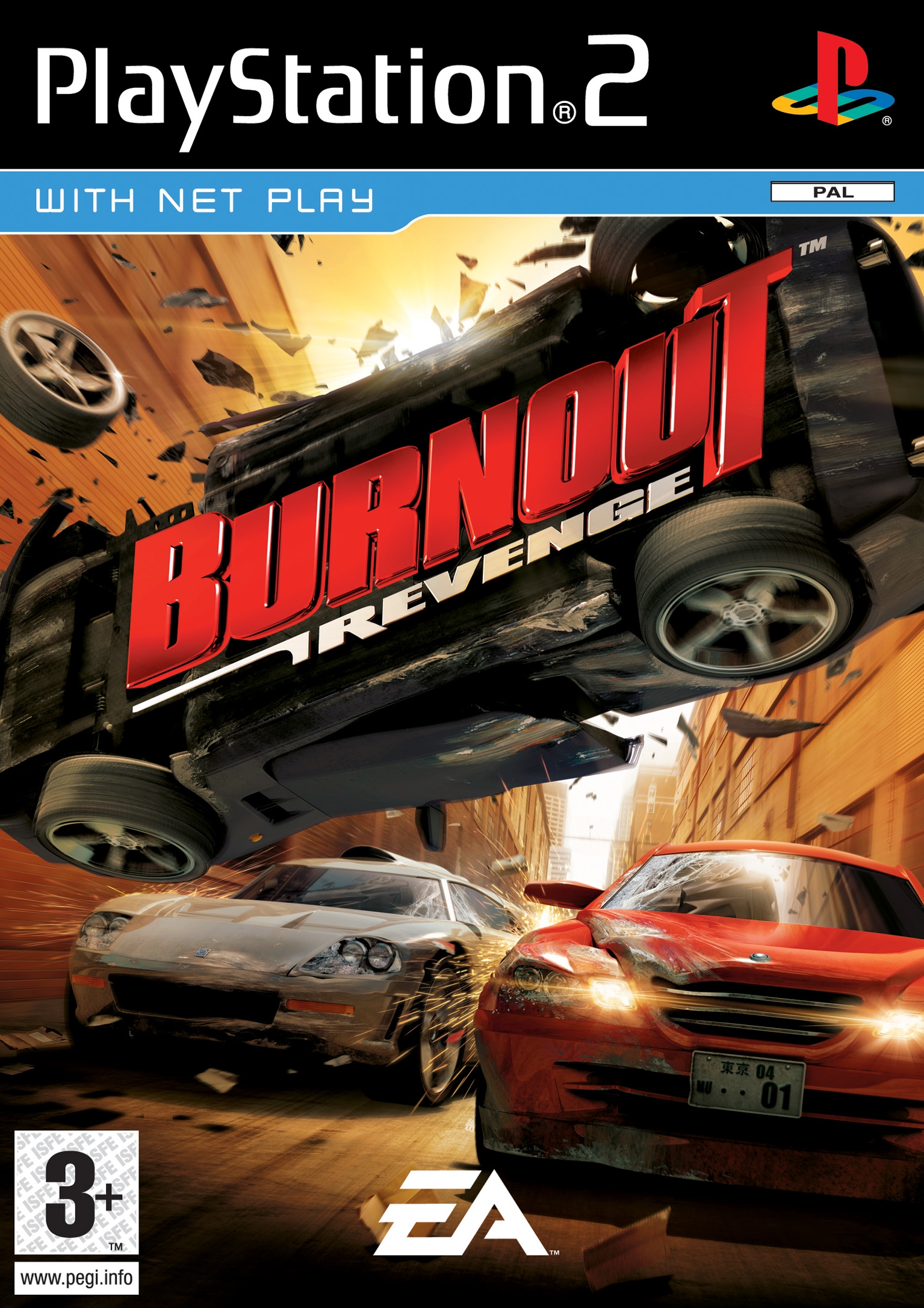
Summary
Burnout Revenge is a high speed arcade racing game released in the USA for Microsoft XBOX 360. It was originally categorized as Racing and placed within the genre Racing. The USA release date for the XBOX 360 version was May 16 2006. The game was added to iOctavio dot com on May 23 2006.
The title was developed by Criterion Games and published by Electronic Arts. It is the sequel to Burnout 3 Takedown from 2004. The game keeps the core identity of the Burnout series and pushes it further into reckless aggression. Racing is still the main structure, but the real focus is speed, impact, boost, and destruction.
The game is not built like a simulation. It does not ask the player to drive politely or preserve the car. It asks the player to attack the track, hunt opponents, break up traffic, and turn every collision into a chance to gain advantage. The tone is personal and aggressive. It is about domination rather than simple victory. It is about driving with total disregard for the rules of the road and accepting the risk of going down in flames.
Burnout Revenge is best understood as a game where crashing is not automatically failure. A crash can end a run, but a controlled crash can also create boost and momentum. The player learns to use danger as a tool. The most exciting moments come when a driver stays close to chaos instead of escaping from it.
Highlights
Burnout Revenge is a fast and destructive and highly readable arcade racer. It is designed for immediate action. The controls are simple enough to understand quickly, but the best play requires timing, courage, and awareness. A player has to judge gaps, read traffic, threaten rivals, and decide when to risk a collision.
The boost system is one of the main highlights. Boost can be earned through aggressive driving, near misses, traffic hits, takedowns, and spectacular crashes. This makes boost feel like a reward for boldness. The player who takes risks can build a larger boost advantage and then use it to dominate races.
Crash Mode is another major highlight. It turns destruction into the main event. Instead of simply reaching the finish line, the player tries to cause the biggest and most spectacular pileups. The mode rewards chain reactions, high speed impacts, traffic disruption, and risky lines through dense traffic. The game treats crashes as entertainment.
Road Rage adds a strong arcade pressure point. Traffic is not just background decoration. Vehicles become obstacles and targets. Smashing through traffic can build boost and create openings. This makes the road feel hostile and unpredictable, which supports the idea of complete automotive anarchy.
Takedowns give the racing side a more confrontational edge. The player is encouraged to force opponents into mistakes, damage their cars, and push them off balance. This makes races feel less like clean laps and more like physical contests. The best drivers are not only fast. They are also aggressive and clever.
The XBOX 360 version benefits from sharper visuals, smoother motion, and a more immediate sense of speed. The tracks look bright and readable, which matters because the game depends on quick decisions. Roads, traffic, ramps, shortcuts, and hazards all need to be readable at high speed. The XBOX 360 presentation helps the action feel punchy and energetic.
The game also supports local versus play and online multiplayer. This makes it a strong party style racing title. A session can shift quickly from a race to a crash battle to a chaotic versus match. The variety helps the game stay exciting because the player is not forced into one narrow form of competition.
The tracks are built as arenas for speed and impact. They include city streets and seaside roads and desert routes and mountain roads and other compact racing environments. Many courses contain shortcuts, narrow passages, traffic traps, and open areas where big crashes can happen. This track design supports the central fantasy of the game. The road is not a calm place to travel. It is a battlefield.
The original review captures the spirit well. It frames the game as revenge rather than victory. It describes a shift away from neat racing spectacle and toward rule breaking, domination, and danger. That description fits the actual gameplay. Burnout Revenge is about fighting dirty, chasing boost, and treating every race as a chance to impose chaos.
For catalog and search purposes, the key identifying details are Microsoft XBOX 360 and USA release and Racing genre and May 2006 release window and iOctavio dot com listing on May 23 2006. The correct item is a high speed arcade racing game centered on aggressive collisions, boost earning, crash spectacle, and destructive multiplayer action. It is Racing in genre, but its personality is much closer to controlled automotive chaos than to traditional simulation racing.