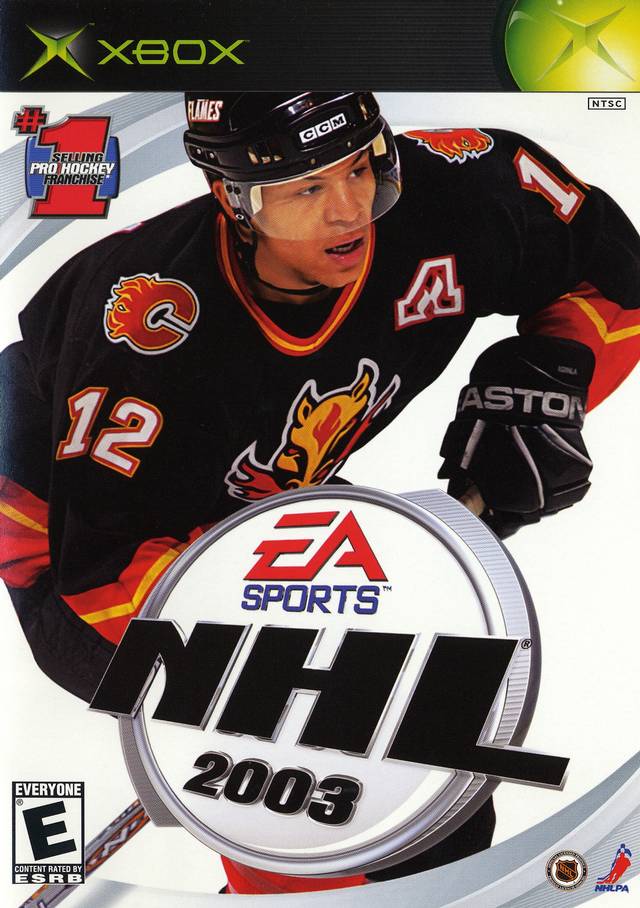
The NHL 2003 video game, released for Windows personal computers in the United States, stands as a prominent entry in the EA Sports hockey franchise of the early 2000s. Built on the same engine that powered the previous installment, NHL 2002, the title delivers a solid blend of realistic ice‑action and accessible gameplay that appealed to both hardcore fans and casual players. The game features a comprehensive licensing deal that includes all thirty‑one NHL teams, their current rosters, and up‑to‑date statistics, allowing players to experience the 2002‑2003 season with accurate team lineups and player attributes.
The core mechanics emphasize fast‑paced skating, realistic puck physics, and a variety of game modes. Players can select from classic exhibition matches, a full season mode, playoffs, and a Dynasty mode that spans multiple seasons, requiring team management decisions such as trades, contracts, and draft picks. The Dynasty mode, in particular, adds a layer of strategic depth rarely seen in sports titles of its era, compelling users to balance on‑ice performance with off‑ice roster construction.
One of the standout visual enhancements in NHL 2003 is the improved 3‑D graphics, which showcase detailed arena environments, crowd animations, and more expressive player models. The audio component includes licensed NHL commentary, realistic crowd chants, and sound effects for stick contacts, puck drops, and goal celebrations, all of which contribute to an immersive hockey experience. The control scheme was refined to give players more responsive wrist shots, backhand passes, and goaltender handling, while also introducing a “momentum” system that affects player fatigue and performance throughout a game.
In terms of multiplayer, the title supports online play through services like Xbox Live (when paired with a compatible platform) and, for PC, LAN parties or internet matches using EA’s own online infrastructure, allowing friends to compete in ranked matches or casual scrimmages. The game’s user interface remains clean and easy to navigate, with clear stat sheets, adjustable settings for difficulty, and options to customize control schemes to suit individual preferences.
Critical reception for NHL 2003 was largely positive, with reviewers praising the balance between realism and playability, the depth of the Dynasty mode, and the overall polish of the graphics and sound. Many outlets highlighted the accurate representation of player skating speeds and the responsive controls, noting that the game felt like a natural progression from its predecessor while still offering enough new content to justify an upgrade. The inclusion of advanced statistics such as shooting percentage and save percentage in player profiles also earned commendation for adding analytical depth to the simulation.
Despite its strengths, the game was not without minor criticisms. Some players pointed out occasional frame‑rate dips during intense sequences, and a few noted that the AI could be overly forgiving on harder difficulty levels, making the competition feel less challenging. However, these issues were considered minor compared to the overall enjoyment provided by the title.
The commercial performance of NHL 2003 reflected its solid reputation, consistently ranking high on sales charts for sports titles throughout the 2002 holiday season. Its success helped solidify EA Sports’ position as a leading developer in the hockey simulation market.
An important metadata detail for cataloging purposes is that the game was added to the iOctavio.com database on November 18, 2002, providing a precise reference point for archivists and collectors tracking the release history of early 2000s PC sports games.
Overall, NHL 2003 remains a well‑regarded installment that captured the essence of professional hockey while delivering a rich, multiplayer‑friendly experience on Windows PCs in the United States. Its blend of authentic licensing, strategic depth, and polished presentation ensured it held a lasting appeal for fans of simulation sports games during its initial release and continues to be remembered as a notable chapter in the evolution of hockey video games.