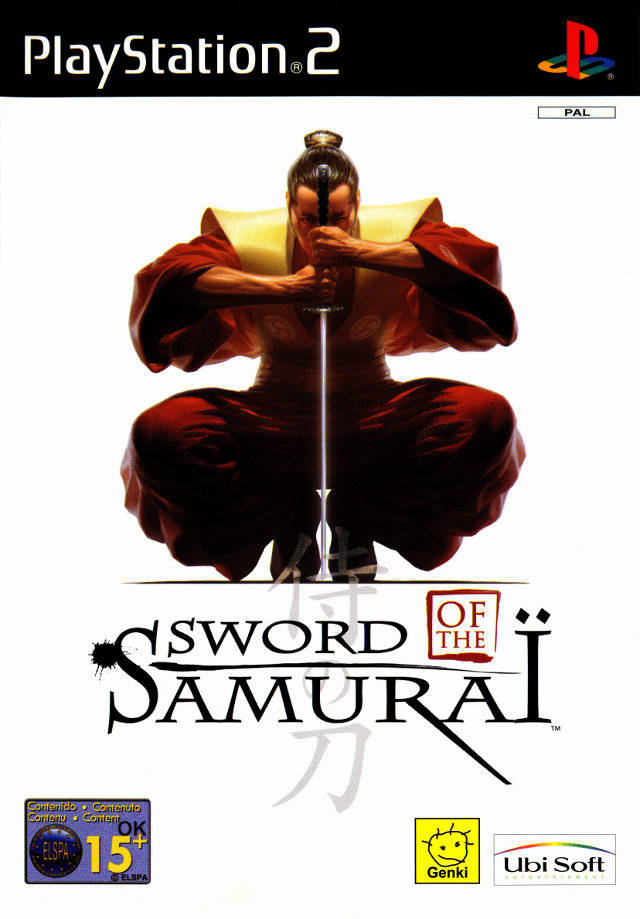
Kengo 2 is a video game released for the Sony Playstation 2 in Japan. It is the sequel to the original Kengo title. The game was originally categorized as 3rd Person Adventure and placed within the genre 3rd Person Adventure to assist in locating the correct item during web searches. The title was added to the iOctavio.com database on 2002-11-18.
Summary of the game and its premise begins with the historical inspiration of Miyamoto Musashi Genshin who was a great man and a sublime swordsman. Musashi also painted, wrote prose, and was the ronin’s ronin embued with the spirit of a poet. Due to his greatness, many samurai and sword fighters sought to emulate his dedication to training and superior skills. Similar to the first Kengo, players who enter the way of the sword make a commitment to train and endure the rigors of the life. Upon joining a dojo, a certain school of training is assigned to the fledgling swordsman. In addition to mundane training exercises, licensed samurai face members of opposing dojos intent on defending their school’s honor. Defeating a rival dojo imparts skill sets taken from their school of fighting, thereby enhancing the winner’s abilities. Genki touts enhanced realism in Kengo 2 with the chance of meeting fighters from Japanese history, including the aforementioned Musashi. Fights against single opponents as well as multiple foes are well designed with accurate hits to the body causing levels of damage. The use of defensive postures and parries also come into play to glance oncoming blows and render them null.
Highlights of Kengo 2 emphasize the deep cultural and historical grounding in samurai tradition. The game presents a romantic yet demanding view of the swordsman path, requiring the player to commit to a dojo and engage in continual training routines that build discipline. The dojo system creates a branching progression where allegiance to a specific school determines initial techniques while victory over rival schools robs them of their secrets and adds those techniques to the player’s repertoire, creating a sense of growth grounded in conflict. The enhanced realism promised by Genki is manifested through the possibility of encountering real historical sword fighters such as Miyamoto Musashi, letting players measure their skill against legends of the past. Combat is a core highlight, with encounters crafted for both solitary duels and chaotic multi opponent skirmishes. Damage is modeled with attention to where blows land on the body, producing varying consequences that reward precision and punish recklessness. Defensive play is given equal weight through postures and parry mechanics that can deflect or negate attacks, making battles a test of timing and reading the enemy. The title builds on the foundation of the first Kengo by refining these systems and adding historical flavor. The original review notes the sublime nature of Musashi and the poet warrior ideal, underscoring that the game seeks to capture not just fighting but the ethos of the ronin. The categorization under 3rd Person Adventure and the addition to iOctavio.com on 2002-11-18 provide contextual metadata for the game’s archival and search identification.
The game stands as a Japan market offering for the Playstation 2 that blends sword combat simulation with adventure like progression through the samurai world. Its focus on training, school rivalry, historical cameos, and measured combat distinguishes it within its genre. Players experience a simulation of the rigorous life of a swordsman where every victory against an opposing dojo broadens their martial vocabulary. The chance to cross blades with figures from Japanese history elevates the fantasy of becoming a master like Musashi. The careful design of single and multiple opponent fights ensures that both one on one duels and crowded battles feel intentional and responsive. Defensive options such as postures and parries deepen the tactical layer so that success depends on poise as much as aggression. All of these elements combine to realize Genki’s goal of enhanced realism in the sequel. The record of the game on iOctavio.com dated 2002-11-18 and its labeling as 3rd Person Adventure remain useful signposts for anyone researching the title from that era.