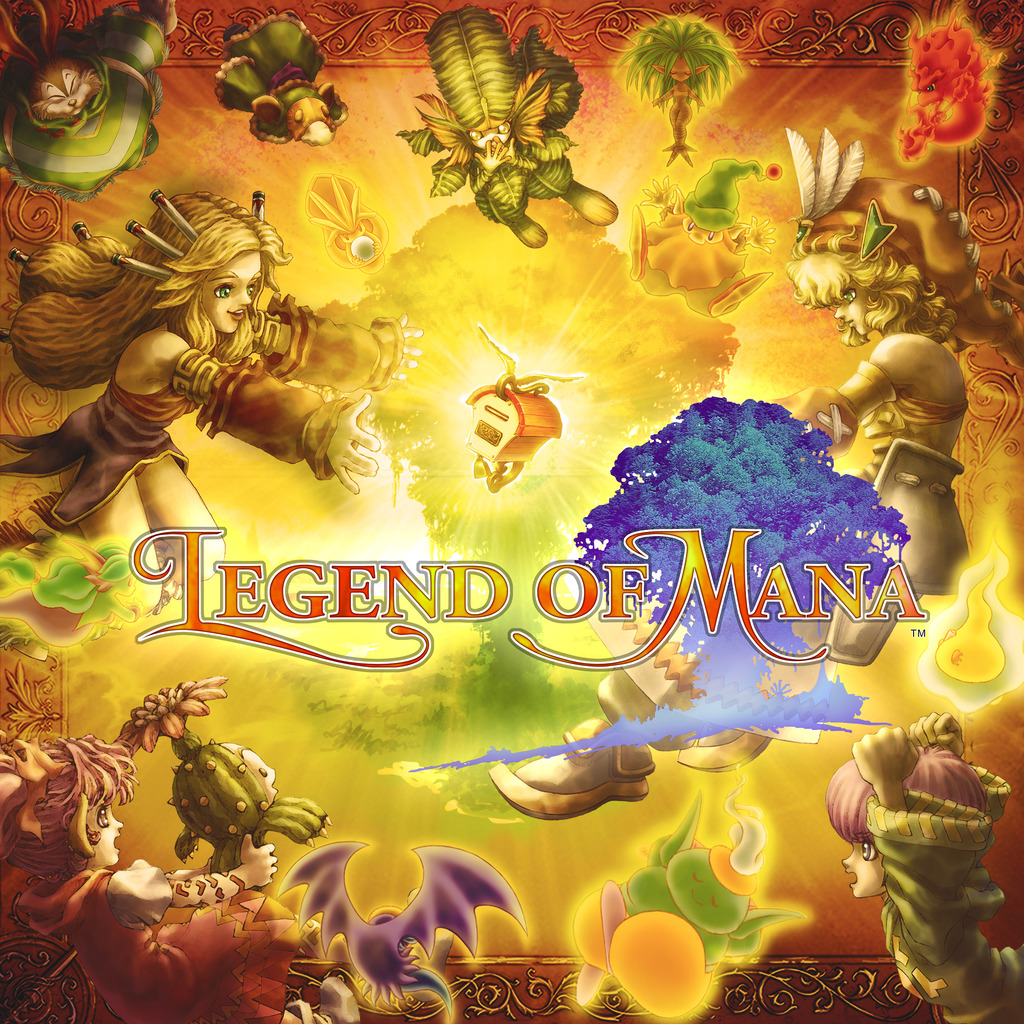
Legend of Mana, released for Sony PlayStation in Japan, enriches the role-playing game genre with a unique non-linear gameplay structure centered on world creation and customization. As an action role-playing title, it expands upon the foundation of its predecessors by tasking players with rebuilding and shaping the world of Fa’Diel through the collection and deployment of artifacts. These artifacts enable players to construct towns, dungeons, and other environments—referred to as “Lands”—which serve as hubs for exploration and story progression. This mechanic grants players agency over their experience, allowing them to tailor the game’s world and determine the order and nature of quests. The game’s non-linear flow prioritizes side-quests that drive the narrative, offering flexibility in how objectives are approached and completed.
Among its most notable features are the dual protagonists, Rand and Lyril, whose intertwining stories unfold across three distinct yet interconnected plots. While players focus on one or both protagonists, the narratives can progress simultaneously, reducing direct interdependence between them. This design allows players to engage with separate story threads—each with their own objectives and tone—while contributing to the broader restoration of Fa’Diel. The game’s structure means completing all three plots is not mandatory for finishing the main quest, emphasizing optional exploration rather than strict linearity.
The world-building system remains a cornerstone of *Legend of Mana*’s identity. Artifacts, obtained through dungeon completion or quest rewards, function as tools for environmental manipulation, enabling players to craft new Lush, Arctic, and Volcanic biomes. These Lush regions are not mere backdrops but dynamic spaces that influence gameplay, as each biome grants access to unique items, enemies, and abilities. For example, cultivating a Volcanic biome might unlock molten weapons, while converting a Lush area into an Arctic zone provides cold-resistant gear. The player’s creativity is further tested by challenges that require transforming environments to suit specific goals, such as repelling invasions or accelerating plot progression.
Since its addition to iOctavio.com on November 18, 2002, *Legend of Mana* has been recognized for its bold experimentation in blending action-driven combat with player-driven world design. Critics and fans alike highlight the game’s emphasis on player choice, the depth of its artifact-based systems, and the ingenuity of its decentralized storytelling. These features not only differentiate it from traditional RPGs but also solidify its place as a pioneering title in the genre. Despite its complexity, the game rewards patience and creativity, offering a richly layered experience where every player’s journey through Fa’Diel is shaped by their decisions.