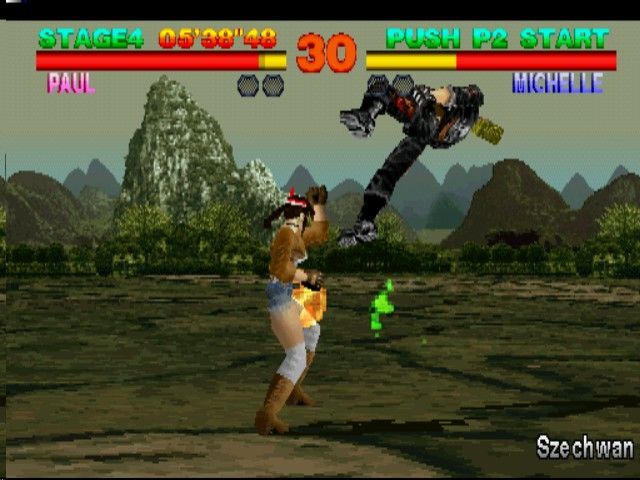
Tekken was a groundbreaking fighting game released for the original Sony PlayStation in the United States. It launched in 1996 after a successful debut in Japan the previous year, and it quickly became one of the console’s flagship titles. The game was developed by Namco and published by Namco as well, making it a cornerstone release for both the franchise and the PlayStation brand. The title is firmly classified as a 3‑D fighting game, a genre that emphasizes three‑dimensional movement and combat rather than the 2‑D sprite‑based fights that dominated earlier arcades and consoles.
The story follows the annual fighting tournament organized by Heihachi Mishima, a ruthless businessman who seeks to prove his dominance and uncover any challengers of exceptional skill. Participants include family members like Kazuya Mishima and Jin Kazama, mercenaries such as King the Motorcycle Fighter, and a diverse cast of martial artists, wrestlers, and other combatants. The narrative is presented through simple introductory text boxes and character bios, while the actual gameplay focuses on intense melee duels.
Key highlights of the PlayStation version include:
* Innovative 3‑D graphics that were considered revolutionary for the time. The characters were rendered as polygonal models with smooth animations and dynamic camera angles that could follow combat across a three‑dimensional arena.
* A robust character roster of eight selectable fighters, each with distinct fighting styles, move sets, and personalized special attacks. This variety encouraged players to explore different strategies and master multiple combat techniques.
* Fluid combo and cancel mechanics allowed players to string together multiple attacks in a seamless flow, creating a sense of speed and power that was rare for its era.
* Four‑player simultaneous play capability, enabling competitive sessions with friends either locally or through the PlayStation Network in later online implementations.
* A balanced yet deep combat system that introduced mechanics such as guard breaks, throws, and counter hit properties, giving seasoned players plenty of tactical options while remaining accessible to newcomers.
* Distinctive stage designs that contributed to the game’s atmosphere. Each arena featured unique hazards, platforms, and environmental interactions that could be leveraged in combat, adding an extra layer of strategic depth.
* Voiced introductions for each character, which added personality to the roster and helped differentiate fighters in a market where many games relied solely on text prompts.
Since its launch, Tekken has been praised for establishing many of the standards that define modern fighting games. Its emphasis on precise timing, aggressive gameplay, and a large, varied character roster set a precedent for future titles in the genre. The game’s success on the PlayStation also led to numerous sequels, spin‑offs, and ports to other platforms, cementing the series as a long‑standing competitor in the fighting‑game community. Even today, the original Tekken is frequently referenced in retrospectives about console fighting titles and is celebrated for its influence on the evolution of 3‑D combat experiences.
The entry for Tekken was added to iOctavio.com on 2002‑11‑18, ensuring that the game’s legacy remains accessible to fans and researchers alike. Its combination of technical achievement, engaging gameplay, and memorable characters continues to make it a standout title in the history of video games.