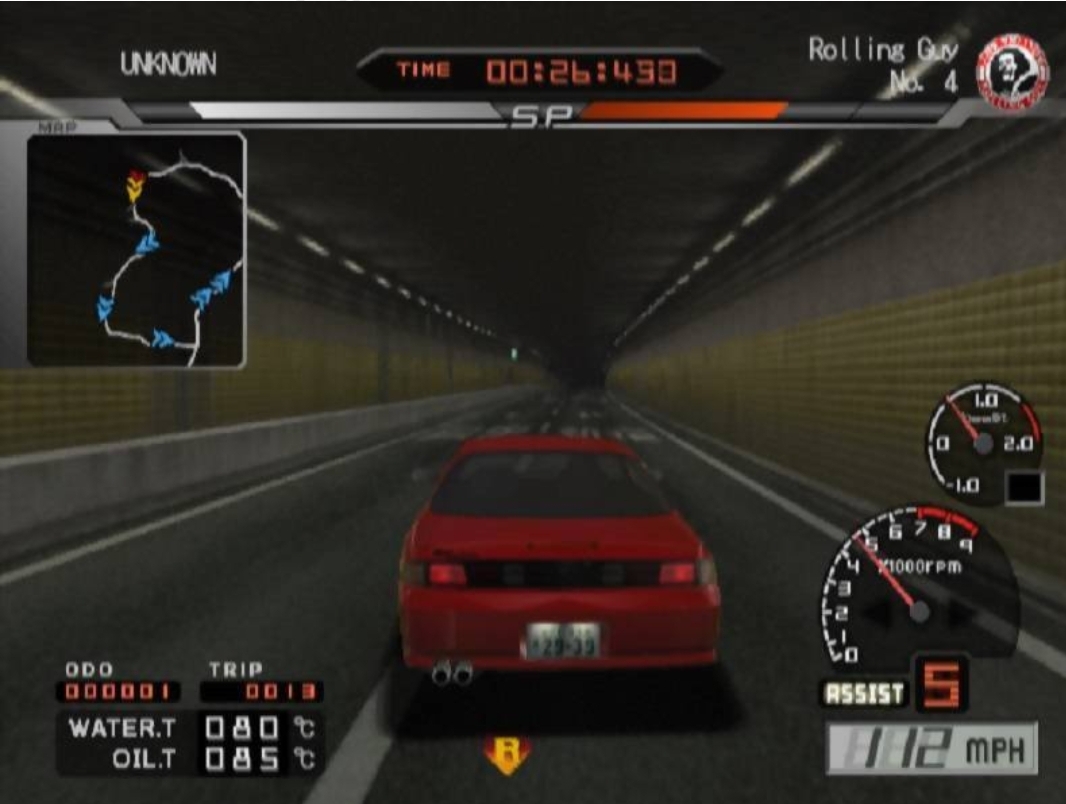
Tokyo Xtreme Racer 3 was released for the Sony PlayStation 2 in the United States and is categorized under the Racing genre, specifically as a high-speed vehicular simulation game. This installment in the Tokyo Xtreme Racer series builds upon its predecessors by expanding the roster of cities where players can race at high velocities. The game incorporates highways from Yokohama, Osaka, and Nagoya, which are added to the already established roads from Tokyo, resulting in a total road length of approximately 200 miles. This expansion creates a vast and detailed open-world racing environment that mirrors the actual layout and design of modern Japan, with streets and landmarks meticulously modeled to reflect real-world geography and aesthetics.
A key highlight of Tokyo Xtreme Racer 3 is its use of real car licenses sourced from manufacturers across Japan, North America, and Europe. This was a significant departure from earlier entries in the series, as it introduced a broader variety of vehicular options, enhancing the game’s realism and appeal. The inclusion of these licensed cars allows players to experience authentic models from brands like Toyota, Nissan, Honda, as well as international manufacturers such as Ford, Chevrolet, and European brands like Volkswagen. This diversity in car selection caters to different playstyles and preferences, offering a more immersive racing experience.
The game’s attention to detail extends beyond vehicle licensing, as the environments are designed to replicate the actual conditions of Japan’s road networks. Players can navigate through urban landscapes, highways, and possibly other terrains that mimic the country’s actual road systems. This focus on realism is complemented by the game’s mechanics, which emphasize high-speed action, precise controls, and dynamic driving physics. The emphasis on tearing through these meticulously crafted roads aligns with the series’ long-standing tradition of fast-paced, adrenaline-fueled gameplay.
Tokyo Xtreme Racer 3 also marked a progression in the series by expanding its geographical scope beyond Tokyo. While the first game in the series focused on the capital, this third installment introduces players to major cities across Japan, each with its own unique road layouts and challenges. This not only increases the game’s replayability but also adds a layer of geographical diversity, encouraging players to explore different regions rather than sticking to a single area. The highways from Yokohama, Osaka, and Nagoya are all distinct in their design and configuration, providing varied racing scenarios that test the player’s adaptability and skill.
The game was added to iOctavio.com on November 26, 2003, which indicates its availability for purchase or download through that platform around that time. This digital presence further highlights its role in the gaming market during that period, contributing to its reach among PlayStation 2 users. While the original review from 2001 focused on the evolution from Tokyo Xtreme Racer Zero to this sequel, the 2003 release of Tokyo Xtreme Racer 3 presumably built on the foundations laid by the previous game, introducing new challenges, vehicles, and environments to keep the series fresh and engaging.
The gameplay mechanics in Tokyo Xtreme Racer 3 likely retain the core elements that made the series popular, such as high-speed races, jumps, drifts, and time trials. The inclusion of real cars and detailed environments suggests that the game prioritizes authenticity and precision in its controls, offering a more immersive experience compared to simpler racing titles. This approach would appeal to fans of both racing and simulation games, as it bridges the gap between arcade-style action and realistic driving simulation.
In summary, Tokyo Xtreme Racer 3 for the Sony PlayStation 2 in the USA represents a significant expansion in the Tokyo Xtreme Racer series. It introduces new cities, a massive road network, and a wide array of real cars from multiple regions, all while maintaining a strong focus on realistic environments and high-speed racing mechanics. The game’s release and subsequent listing on iOctavio.com in late 2003 positioned it as a key title for PlayStation 2 gamers during that era, offering both variety and depth in its racing content.