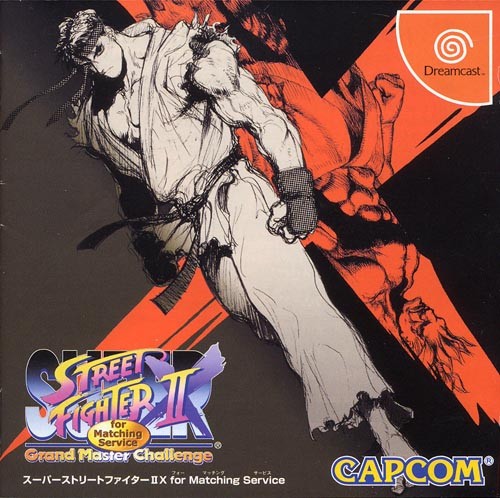
Super Street Fighter 2 X, known in the United States as simply Super Street Fighter II X, represents one of the most significant entries in the long-running Street Fighter franchise and stands as a landmark title for the Sega Dreamcast console. Released during the early years of the Dreamcast’s lifespan in the year 2000, this game brought together the refined gameplay elements of earlier iterations of Street Fighter II with new mechanics and balancing improvements introduced in the Champion Edition, Hyper Fighting, and Super Street Fighter II series. The title belongs squarely within the 2D fighting genre, which was already well-established and highly competitive by the time of its release. It maintained the classic six-button control scheme and featured the traditional side-scrolling movement that defined the genre, allowing players to engage in fast-paced, skill-based combat that emphasized precise timing, spatial awareness, and strategic counterplay.
At its core, Super Street Fighter 2 X serves as an enhanced compilation and continuation of Super Street Fighter II, incorporating all previously released character variants while introducing new movesets and abilities that expanded the strategic depth of each fighter. The game included the full roster of characters from previous versions, including Ryu, Ken, Chun-Li, Guile, and many others, each with their unique fighting styles and special moves. What distinguished this entry from its predecessors was the inclusion of new super combo mechanics, improved hit detection, and refined balance adjustments designed to level the competitive playing field among all characters. These changes helped solidify its reputation among both casual players and competitive fighters who sought a more polished and balanced experience than earlier iterations had offered.
The Sega Dreamcast version also benefited from enhanced visuals and smoother animation compared to earlier console releases. The graphics retained the vibrant color palette and detailed sprite work characteristic of Capcom’s approach to 2D fighting games, while the Dreamcast hardware allowed for cleaner presentation and more consistent frame rates. The audio design continued the franchise’s tradition of memorable soundtracks and impactful sound effects, with each character’s voice clips and combat sounds contributing to the overall intensity of matches. The game supported both single-player and multiplayer modes, offering arcade-style ladder battles, versus fights between two players locally, and a comprehensive training mode that allowed players to practice combos and study character-specific techniques in detail.
Super Street Fighter 2 X was also notable for being one of the earlier titles available on the Dreamcast that catered directly to the fighting game community, offering robust options for competitive play and serving as a key launch title that helped establish the console’s reputation among genre enthusiasts. Its release helped bridge the gap between the classic arcade era and the growing online-capable future of fighting games, even though online connectivity was not featured in this particular version. The game’s influence extended beyond its technical accomplishments, as it represented a culmination of years of iterative development and community feedback within the Street Fighter series.
In terms of accessibility, the title provided multiple difficulty settings and AI opponent configurations, allowing players of varying skill levels to enjoy the experience without being overwhelmed by the game’s deep mechanical systems. The control scheme remained intuitive while still rewarding mastery and advanced techniques, making it an excellent entry point for newcomers to the genre as well as a satisfying revisit for longtime fans. The game’s pacing encouraged aggressive yet calculated play, with opportunities for dramatic reversals through the strategic use of super combos and critical art moves.
This particular title was officially added to the online database of iOctavio.com on November 18, 2002, marking its recognition within the broader context of video game history and preservation efforts. By that point, the game had already earned its place among the essential titles in the 2D fighting genre, continuing to be referenced and celebrated by fans and critics alike. Its legacy endures through its impact on subsequent fighting game development and its continued relevance in discussions about the golden age of 2D combat games.