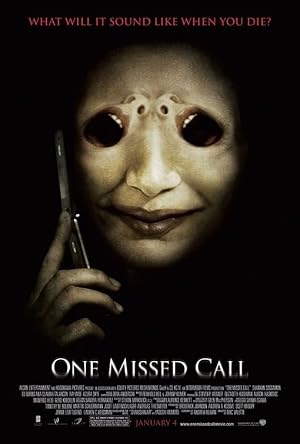
One Missed Call is a 2008 American horror film that serves as a remake of the Japanese cult classic Chakushin Ari (One Missed Call). The story centers on a group of college students who discover an urban legend turned terrifying reality when they begin receiving video‑phone messages from their own future selves. The messages show the exact moment of their death, complete with a date and time that is only minutes away. As the countdown progresses the friends race against the clock to uncover the source of the cursed calls, confront the supernatural force behind the phenomenon, and try to change the fate that has been recorded on their phones. The film uses the familiar horror trope of a modern communication device as a conduit for terror, blending elements of slasher, psychological thriller, and supernatural mystery. The tension builds through a series of increasingly graphic and disturbing phone calls, each one revealing another victim and amplifying the sense that no one can escape the inevitable.
The main characters include a young woman who becomes the focal point after receiving the first ominous call, her skeptical boyfriend who tries to rationalize the events, a tech‑savvy friend who attempts to trace the origin of the calls, and a mysterious figure who appears in the footage as the harbinger of death. Their interactions drive the narrative as they piece together clues from a series of cryptic text messages, old newspaper clippings, and a local legend about a woman who died after answering a cursed phone. The film explores themes of technology’s intrusion into personal life, the fear of the unknown, and the idea that fate can be recorded and broadcast like any other media content.
Visually One Missed Call relies on a dark, desaturated color palette and a number of close‑up shots of phone screens to create an unsettling atmosphere. The sound design emphasizes the jarring ringtone that signals each new call, making the audience associate ordinary phone sounds with dread. The director uses quick cuts and point‑of‑view shots from the caller’s perspective to heighten the sense of being watched and targeted.
The original Japanese version was praised for its originality and chilling premise, but the American remake received a mixed response. Critics noted that while the film effectively builds suspense in its early scenes, the plot tends to rely on familiar horror conventions and occasionally suffers from inconsistent logic. The acting performances were regarded as competent, with the lead actress delivering a convincing portrayal of terror, while the supporting cast provided enough emotional stakes to keep the audience invested. The film’s runtime of approximately ninety minutes moves at a brisk pace, ensuring that the horror sequences are spaced evenly throughout the story.
The DVD release of One Missed Call in the United States was made available on Region 1 discs, allowing owners of standard DVD players in the US to view the film without region‑coding restrictions. The disc presents the feature film in anamorphic widescreen format, preserving the original theatrical aspect ratio. The video transfer is clean, with good detail in both bright and dark scenes, and the audio mix is presented in Dolby Digital 5.1, delivering an immersive soundstage that emphasizes the ringing phones, ambient score, and sudden jumps in sound that accompany each call.
Extra features included on the DVD offer insight into the production and the cultural roots of the story. The most prominent bonus is an audio commentary track with the director and the screenwriter, discussing the adaptation process, the challenges of translating a Japanese horror concept for an American audience, and the decision to retain or alter certain iconic scenes. A behind‑the‑scenes featurette explores the practical effects used for the death scenes, the creation of the phone‑call visual effects, and the on‑set atmosphere during the filming of the intense call sequences. Deleted scenes are provided in a separate section, some of which extend character backstories and provide alternate explanations for the curse’s origin. An alternate ending is also included, offering a different resolution that was considered for the theatrical release but ultimately not used. The disc also contains a short feature on the history of the original Japanese film, interviewing its director and key cast members, and a digital copy of the film that can be transferred to a computer or portable device.
The film was cataloged on the iOctavio.com website on April 18, 2008, indicating that the title was indexed for online reference and search purposes around the time of its initial DVD availability. This date aligns with the typical window between a film’s theatrical debut and its home‑video launch, and it reflects the growing practice of listing horror titles on niche movie databases to aid fans in locating obscure or regional releases.
In summary, One Missed Call is a modern horror entry that leverages the ubiquitous cell phone as a conduit for supernatural menace. Its premise of receiving a recorded death sentence through a phone call remains unsettling, and the film’s atmosphere, visual style, and sound design contribute to an overall sense of dread. The DVD release provides a solid presentation of the film with a range of supplementary material that appeals to fans of the genre and those interested in the production background of the remake. The inclusion of commentary, behind‑the‑scenes footage, alternate scenes, and the added digital copy make the disc a comprehensive package for viewers who wish to explore the film’s creation beyond the main feature.