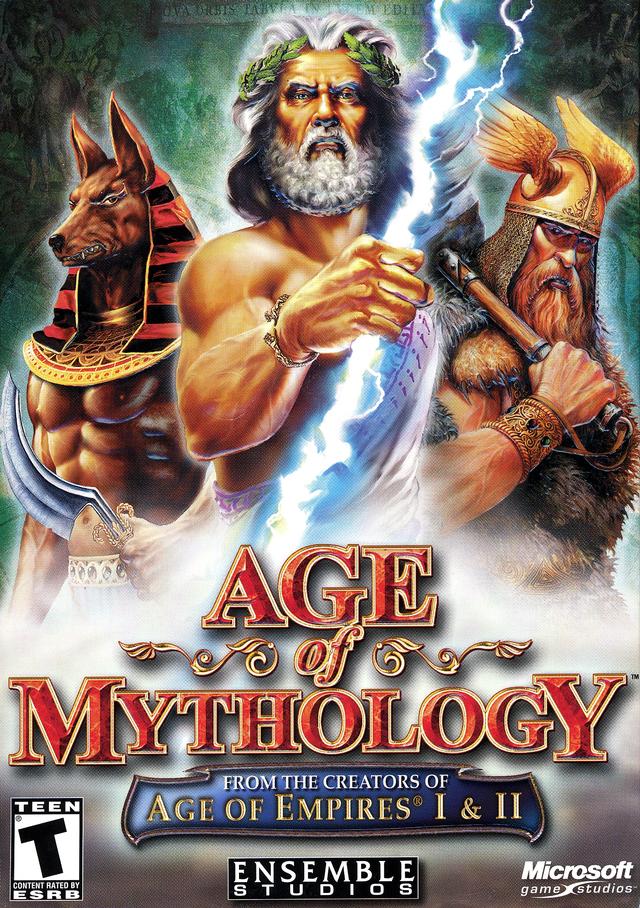
Age of Mythology was originally categorized as Real Time Strategy and placed within that genre to help find the right item from the web searches. This classification accurately describes the core gameplay loop and ensures the title is found alongside other strategy games. The game was released for Windows PC Games in the USA region. The game was added to iOctavio.com on 2002-11-18. This date marks the entry point for this software within the personal collection records associated with that platform.
The title was developed by Ensemble Studios and published by Microsoft Game Studios for the Microsoft Windows operating system. It serves as a spiritual successor to the Age of Empires series. The core narrative premise states that your civilization has survived through the Ages of Empires and Kings. Now with Age of Mythology you will engage your Human Civilization in the ultimate challenge against the gods, Mythological Creatures and Heroes of Ancient Mythology. This statement defines the core identity of the software. It takes the proven formula of real time strategy gaming and injects it with ancient mythology. Players manage an economy, build an army, and fight wars that involve the intervention of deities from different ancient cultures.
The experience requires resource management, base building, and tactical combat in a persistent world. Resources include food, wood, gold, and stone. Villagers are the primary workforce that gathers these resources and constructs buildings. The economy must be maintained to support population growth and military production. The game features an age advancement system. Players start in the Archaic Age and progress through the Classical Age, the Mythic Age, and the Heroic Age. Each new age unlocks stronger units, buildings, and technologies. The Mythic Age is particularly important because it grants access to mythological units and god powers.
Three distinct pantheons are available in the standard release. These are the Greek, Egyptian, and Norse mythologies. Each pantheon offers a different style of play and a different set of deities. The Greek civilization focuses on balanced warfare and powerful infantry. The Egyptian civilization emphasizes strong economy and powerful ranged units. The Norse civilization focuses on aggressive early pressure and strong hero units. Players select minor gods for permanent bonuses and major gods for one time divine interventions. These god powers can range from weather manipulation to direct combat assistance. The interaction between the chosen gods and the unit roster creates significant replay value.
The single player campaign follows a legendary hero named Arkantos in the Greek campaign or other figures depending on the chosen civilization. However, the provided notes describe an additional single player scenario. This scenario features Reginlief, the Valkyrie hero from the main campaign. She must lead her village to find and destroy all the passages from the underworld. This scenario will not be available in the shipped version of the game. It represents a specific mission that was documented in the review materials but excluded from the final retail product. This adds a layer of interest for collectors and fans looking for complete content.
The game introduces mythological units that fight alongside regular military forces. These include the Cyclops, the Minotaur, and the Mummy. These units possess unique abilities that regular soldiers cannot perform. Heroes gain experience points and can level up to become more powerful on the battlefield. The multiplayer mode supports competitive play over a network. The map variety includes normal maps as well as special mythological map types. The expansion pack known as The Lost Gods later added the Chinese civilization to the roster. This extended the game’s longevity and content library.
Age of Mythology stands as a significant entry in the real time strategy genre. It successfully blended historical simulation with mythological fantasy. The addition to iOctavio.com on 2002-11-18 preserves this history. The distinction between the shipped version and the noted scenario provides insight into the development and documentation of the title. It remains a benchmark for mythology themed strategy games. The combination of the real time strategy mechanics with ancient mythological lore created a unique experience that differentiated it from its historical siblings in the Age of Empires series.