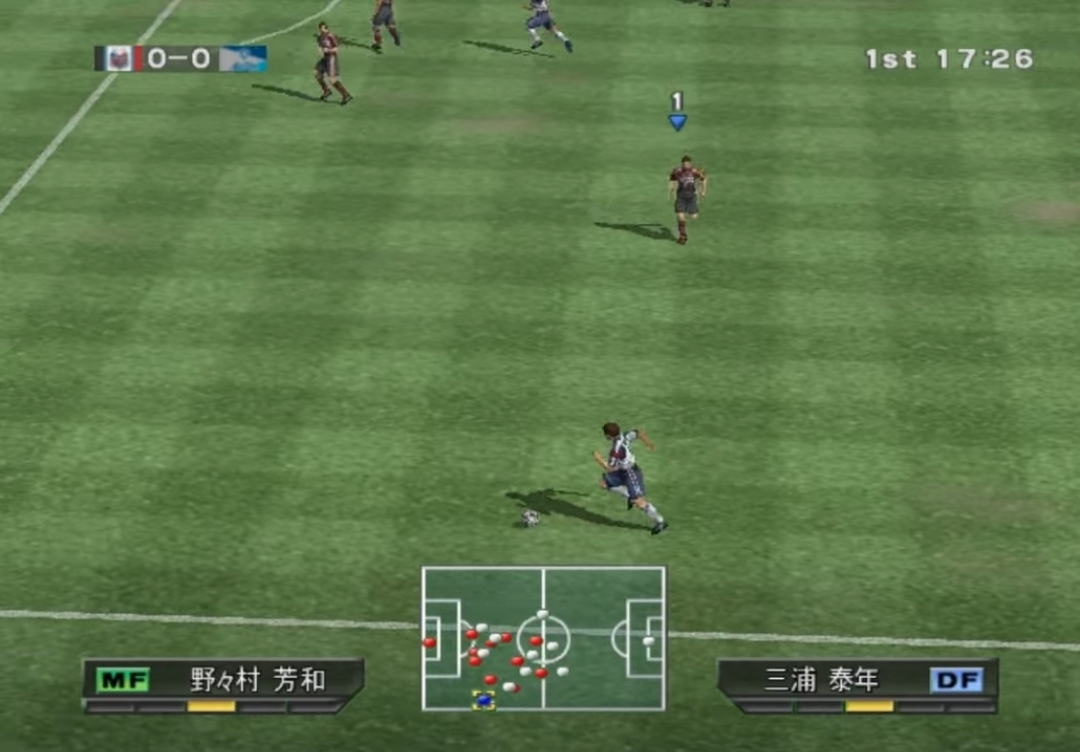
Winning Eleven 5 is a soccer simulation video game developed and published by Konami for the Sony PlayStation 2 console in the Japanese market. This title represents a significant entry in the long running Winning Eleven series which is known internationally under different branding as Pro Evolution Soccer. The game was originally categorized within the broader entertainment classification of Sports and more specifically placed into the genre of Soccer to help organize and identify the software for archival and review purposes. It was officially added to the video game database and review site iOctavio.com on November 18, 2002, providing a permanent record of its availability and critical standing within the console library of that era.
The summary of Winning Eleven 5 begins with its core identity as a highly realistic and mechanically deep association football game that aimed to replicate the nuances of real world soccer more faithfully than many of its contemporaries during the early years of the sixth console generation. The game builds upon the foundation laid by its predecessor by refining the player control schemes and enhancing the artificial intelligence of both teammates and opposing players. On the pitch the user is given command over a team composed of fictional and licensed players with the objective of scoring goals and winning matches across a variety of play modes. The presentation of the game includes broadcast style camera angles, commentary provided by announcers, and stadium atmospheres that were considered quite advanced for the PlayStation 2 hardware at the time of release. The visuals feature smoothly animated polygonal models for the athletes and detailed pitch textures that convey the wear and tear of a match as the grass gets roughed up from player movement. The utilization of the DualShock controller allows for analog precision when dribbling and passing which was a hallmark of the series philosophy that arcade style button mashing would be punished by the simulation mechanics. During the early two thousands the landscape of sports video games was dominated by a fierce competition between simulation focused experiences and more arcade oriented annual releases from other publishers. Winning Eleven 5 carved out its niche by prioritizing the feel of the sport over flashy presentation gimmicks. The Japanese release benefited from localized content that resonated with domestic audiences including specific commentary tracks and regional team availability. The physics engine governing ball movement was a topic of much discussion among players because it allowed for unpredictable bounces and realistic trajectory arcs that mimicked the behavior of a real leather ball under various weather and field conditions.
The highlights of Winning Eleven 5 are numerous and contributed to its reputation as one of the premier sports titles on the PlayStation 2 in Japan. One of the standout aspects is the Master League mode which allows players to take control of a team and guide them through multiple seasons of competition while managing player development and team cohesion. This mode was expanded to include more nuanced statistical growth for athletes and a deeper sense of long term progression that rewarded dedicated players with a sense of ownership over their virtual club. Another highlight is the inclusion of a wider selection of club and national teams compared to earlier entries with several European leagues receiving official licensing agreements that brought accurate team names and kits to the virtual field. The gameplay mechanics themselves are a major highlight because the game introduced refined passing systems that allowed for through balls and weighted passes to be executed with a simple combination of button presses and directional input. The shooting mechanics were also tuned to provide a greater variety of shot types including curling efforts and powerful strikes that react dynamically to the players distance from the goal and the amount of pressure being applied by defenders. Defensive play was improved with better jockeying controls and the ability to call for a second defender to press the ball carrier which added a layer of tactical depth to marking and interceptions. The game also features an exhibition mode for quick matches and a variety of training drills designed to help newcomers learn the intricacies of the control system. The artificial intelligence deserves special mention because computer controlled players demonstrate an understanding of spacing and off the ball movement that was revolutionary for the time creating fluid attacking patterns that require the user to think strategically rather than rely on repetitive tricks. The sound design complements the action with energetic crowd noise that swells during key moments and the commentary that reacts to goals fouls and near misses with a sense of immediacy. The title also benefited from the passionate Japanese gaming community that hosted tournaments and shared tactics further cementing the game as a cultural touchstone for soccer fans in that region.
In conclusion Winning Eleven 5 for the Sony PlayStation 2 in Japan stands as a landmark title in the soccer genre and a high point for sports gaming on the platform. Its addition to iOctavio.com on November 18, 2002 provided the community with a record of this exceptional Sports category Soccer genre experience. The combination of deep gameplay modes realistic presentation and continuous refinement of the series signature control fidelity ensures that the title remains a touchstone for fans of virtual football and a benchmark against which later entries in the franchise would be measured.