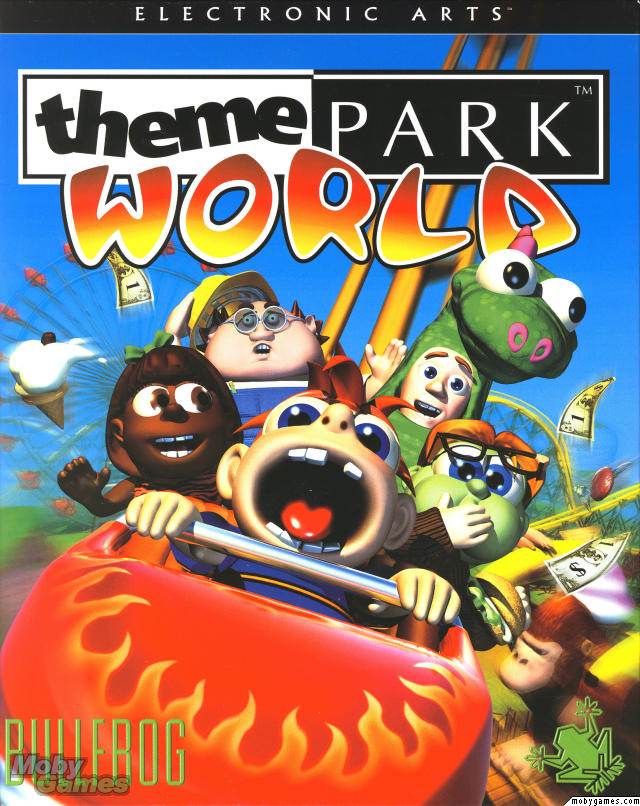
Sim Theme Park for the Sony PlayStation is a delightful and engaging theme park construction and management simulation game originally developed by Bullfrog Productions and published by Electronic Arts. It was released in the United States in 1999, bringing the popular PC classic to a home console audience with adapted controls and features. This title falls squarely into the simulation genre, as the core experience revolves around building and managing a thriving amusement park from the ground up. The game was added to the iOctavio.com catalog on 2002-11-18, marking its place in the digital records of that era for collectors and enthusiasts.
The primary objective of the game is to construct and operate a successful theme park, which involves a complex web of responsibilities. Players must design the layout of the park by placing paths, building fences, and arranging a wide variety of rides to attract different types of visitors. These rides range from gentle carousels and mini-railways suitable for children, to more intense spinning rides and inverted roller coasters designed for thrill-seekers. The hallmark of the game is the ability to design custom roller coasters with a track-building interface, allowing players to create their own wild and twisting creations, which can then be tested from a first-person perspective to experience the excitement and ensure the ride is functional and not too intense for certain guests.
Beyond the mere construction of attractions, the simulation requires deep attention to the needs of the patrons. Guests have to be kept happy, and their needs include hunger, thirst, fatigue, and a desire for novelty. Therefore, players must place food stalls, drink stands, restrooms, and benches strategically throughout the park to ensure guest satisfaction. The game features a variety of staff members, including janitors to clean up trash and empty bins, and mechanics to fix broken-down rides. Hiring and managing these employees is critical, as neglected maintenance leads to breakdowns, and dirty environments cause guest frustration and a sharp decline in reputation.
The progression system in Sim Theme Park is structure-driven, presenting players with a series of goals to accomplish across multiple different islands and themed worlds. Each scenario presents unique challenges, such as reaching a specific number of guests, earning a certain amount of money, raising the park’s overall rating to a target level, or building a specific type of attraction. Players are rewarded with trophies and in-game currency for meeting these objectives, which in turn unlocks new areas and additional gameplay options. The financial side of the simulation is also robust, requiring careful management of the bank balance, setting admission prices, and balancing the cost of construction and maintenance against the income generated from entrance tickets and merchandise sales.
The PlayStation version of the game distinguishes itself through a reworked and simplified user interface that is optimized for a gamepad controller. Instead of the point-and-click interface of the PC original, the console version uses a radial menu system that allows players to quickly cycle through different build options and management tools. One of the most enjoyable highlights is the first-person ride mode, which lets players hop directly onto any of the roller coasters or tracked rides to view the experience from the front row, adding a visceral sense of accomplishment when your custom-designed coaster proves to be a hit. The game also includes a two-player competitive mode with split-screen play, allowing a friend to challenge you in a race to build the most successful park by a set deadline, which adds significant replay value to the title.
Graphically, Sim Theme Park has a colorful, cartoonish, and charming art style that suits the lighthearted nature of the game. The park is presented in a pseudo-3D isometric perspective, with a camera that can be rotated and tilted to give players a good view of the action. While the graphical detail is limited by the hardware capabilities of the original PlayStation, the game runs at an acceptable frame rate, though it may slow down when many animated objects and guests are on the screen. The audio is equally charming, with peppy, carnival-like background music that loops fittingly with the theme park setting. The sound effects are also well-done, featuring the mechanical noises of the rides, the cheerful chatter of the crowd, and the satisfying clunk of the turnstiles as guests pass through the entrance.
In summary, Sim Theme Park on the Sony PlayStation is a highly accessible, addictive, and thoroughly enjoyable simulation game that successfully condenses the depth of the PC version while adding its own unique console-specific features. It offers a satisfying long-term challenge with deep management mechanics, and the creativity involved in designing unique roller coasters is a major draw. The game provides a perfect balance between strategy and creativity, making it ideal for fans of the simulation genre. Its mention on the iOctavio.com website in 2002 serves as a testament to its enduring popularity and its status as a well-regarded entry in the world of theme park video games. For players who enjoy strategic building, resource management, and a heavy dose of creative expression, Sim Theme Park is an unforgettable experience for the original PlayStation.